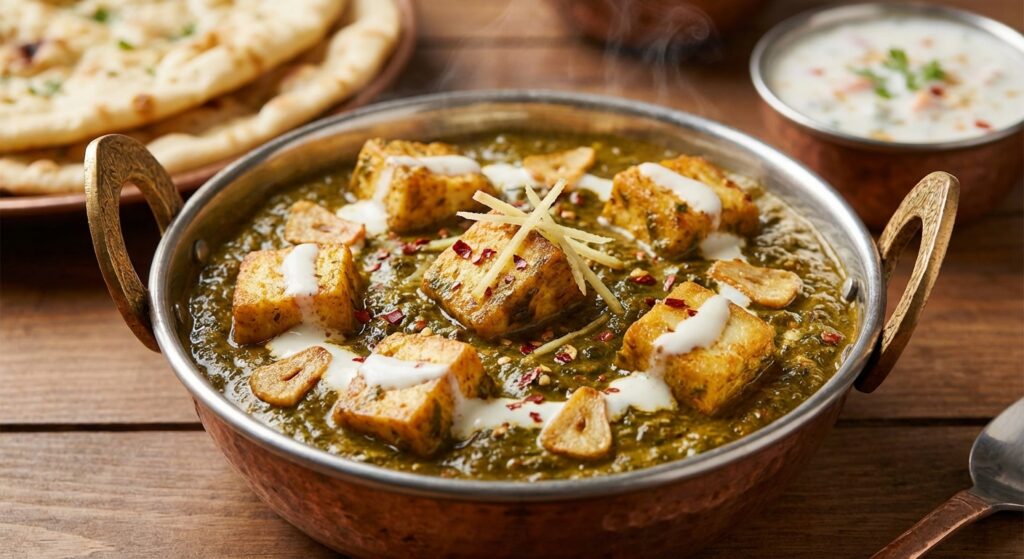
Lahsuni Palak Paneer — Garlic Loaded Ultra Creamy Hotel Style
There are certain dishes in Indian cuisine that manage to be simultaneously humble and luxurious. Palak paneer is one of them — a dish of fresh spinach and soft cheese cubes that has graced home dining tables and five-star hotel buffets alike for generations. But not all palak paneer is created equal. The version you get at a good Indian restaurant has a silky, creamy, almost velvet-like texture that coats each cube of paneer in a blanket of vibrant green sauce. It tastes rich without being heavy, garlicky without being harsh, and spicy without overwhelming the delicate flavors of the spinach and cheese. This is the hotel-style palak paneer, and this particular recipe takes it a step further by loading it with garlic — the lahsooni version that garlic lovers dream about.
The secret to truly exceptional lahsooni palak paneer lies in the technique, not just the ingredients. It is about how you blanch the spinach to preserve that electric green color, how you roast the garlic to mellow its sharpness into a sweet, nutty depth, and how you finish the dish with just the right amount of cream and butter to create that signature restaurant richness. Most home-cooked versions fall short because they skip these critical steps — they overcook the spinach into a dull olive drab, they use raw garlic that burns and turns bitter, or they skip the cream and butter in an attempt to keep things light. This recipe holds nothing back. It is unabashedly rich, deeply garlicky, and exactly the kind of dish that makes people ask for seconds before they have finished their first plate.
Ingredients — What You Need and Why Each Matters
The quality of your ingredients directly determines the quality of your palak paneer. Here is what you need and why each component is important:
Fresh spinach (palak): Use about 500 grams of fresh, vibrant green spinach leaves. Avoid spinach that is wilted or yellowing — the fresher the spinach, the better the color and flavor of the final dish. Baby spinach works but has a milder flavor; mature spinach has a more robust, earthy taste that stands up better to the bold garlic and spices.
Paneer: About 250 grams, cut into one-inch cubes. If you can get fresh paneer from an Indian grocery store, use that — it has a softer, creamier texture than the shelf-stable variety. For the best results, lightly pan-fry the paneer cubes in a little ghee or oil until the edges turn golden before adding them to the gravy. This adds a subtle nuttiness and prevents the paneer from crumbling in the sauce.
Garlic (lahsun): This is the star of the show. Use 8 to 10 large cloves of garlic — yes, that is a lot, and that is the point. Half of the garlic goes into the spinach puree (roasted for sweetness), and the other half goes into the tadka (tempered in ghee for an aromatic crunch). Use fresh garlic, not pre-minced jarred garlic, which has a stale, acidic flavor.
Ginger: A one-inch piece, roughly chopped. Ginger adds warmth and balances the garlic. Do not skip it — it provides an essential bridge between the garlic and the spinach.
Green chilies: Two to three, depending on your heat preference. They add a fresh, bright heat that complements the creamy sauce without making it punishingly spicy.
Onion: One medium, finely chopped. The onion provides a sweetness and body to the gravy that forms the foundation of the sauce.
Tomatoes: Two medium, roughly chopped. Tomatoes add acidity and depth, balancing the richness of the cream and butter. Use ripe, red tomatoes for the best flavor.
Cream: Two to three tablespoons of heavy cream (or fresh malai). This is what gives the gravy its hotel-style luxurious texture. Do not substitute with milk — the fat content is essential.
Butter and ghee: One tablespoon each. Butter adds flavor to the gravy, while ghee is used for the tadka. Using both gives you the best of both worlds.
Spices: Cumin seeds, turmeric powder, red chili powder, garam masala, and kasuri methi (dried fenugreek leaves). Each spice plays a specific role — cumin for earthiness, turmeric for color and warmth, chili for heat, garam masala for complexity, and kasuri methi for that distinctive restaurant aroma.
Step-by-Step Method — The Hotel Technique
Step 1: Blanch the spinach. Bring a large pot of water to a rolling boil. Add a pinch of sugar and a pinch of salt — the sugar helps preserve the green color, and the salt seasons the spinach. Drop the spinach leaves into the boiling water and blanch for exactly 60 to 90 seconds. Do not overcook. As soon as the leaves wilt and turn bright green, drain them immediately and transfer to a bowl of ice water. This shocking technique stops the cooking instantly and locks in the vibrant green color. After the spinach has cooled completely, drain it well and squeeze out excess water. This step is crucial — excess water in the spinach will make your gravy thin and watery.
Step 2: Make the spinach puree. Place the blanched spinach in a blender along with the chopped ginger, green chilies, and five to six cloves of roasted garlic (see below for roasting). Blend to a smooth, thick puree. If the mixture is too thick to blend, add one to two tablespoons of water — but not more. You want a thick, concentrated puree. Set aside.
Step 3: Roast the garlic. Take five to six large garlic cloves, peel them, and lightly crush them with the flat side of a knife. Heat half a tablespoon of ghee in a small pan over medium-low heat and add the garlic. Roast for two to three minutes, turning occasionally, until the cloves are golden and fragrant. Do not burn them — burnt garlic turns bitter and will ruin the dish. Set these roasted cloves aside to add to the spinach puree.
Step 4: Cook the base. In a heavy-bottomed pan or kadhai, heat one tablespoon of butter and half a tablespoon of ghee together over medium heat. Add cumin seeds and let them sizzle for about 30 seconds. Add the finely chopped onion and cook for five to seven minutes, stirring frequently, until the onion turns soft and golden. Do not rush this step — the onion should be fully cooked and sweet, not raw or crunchy.
Add the chopped tomatoes, turmeric powder, red chili powder, and a pinch of salt. Cook for five to seven minutes until the tomatoes break down completely and the oil starts to separate from the masala. This indicates that the raw flavor of the tomatoes and spices has been cooked out.
Step 5: Combine and simmer. Add the spinach puree to the pan and stir well to combine with the tomato-onion base. Cook on low heat for three to four minutes, stirring regularly, until the puree is heated through and the flavors have melded. Add a splash of water if the gravy is too thick — you want it to be pourable but still substantial enough to coat the paneer cubes.
Step 6: Add paneer and finish. Gently slide the paneer cubes into the gravy. Stir carefully to avoid breaking the paneer. Add garam masala, kasuri methi (crush it between your palms before adding to release its aroma), and cream. Stir gently and cook on low heat for two to three minutes. Taste and adjust salt and spice levels. The gravy should taste rich, creamy, garlicky, and well-balanced.
Step 7: The garlic tadka. This is what makes it lahsooni. Heat half a tablespoon of ghee in a small pan. Add six to eight thinly sliced garlic cloves and fry on medium heat until they turn golden brown and crispy. Add a pinch of dried red chili flakes for color and a tiny pinch of asafoetida for depth. Pour this sizzling tadka directly over the palak paneer in the serving bowl. The sound, the aroma, and the visual impact of the golden garlic floating on the vibrant green sauce is what takes this dish from good to extraordinary.
Why Hotel-Style Palak Paneer Tastes Different from Home Versions
If you have ever wondered why restaurant palak paneer tastes so much better than what you make at home, it comes down to three key differences. First, restaurants use significantly more fat — butter, ghee, and cream — than most home cooks are comfortable with. This extra fat is what creates the luxurious mouthfeel and carries the flavors across your palate. Second, restaurants blanch and shock their spinach to preserve the green color, while home cooks often boil the spinach until it turns olive green, which affects both appearance and flavor. Third, restaurants strain their spinach puree to remove fibrous bits, creating a smoother texture. You can replicate this at home by passing the puree through a fine-mesh sieve.
Variations and Customizations
This recipe is a starting point, and there are several ways to customize it to your taste:
PANEER BUTTER MASALA STYLE: Add one tablespoon of tomato paste to the base along with the tomatoes for a slightly tangier, redder version that sits somewhere between palak paneer and paneer butter masala.
CREAMY VEGAN VERSION: Replace paneer with firm tofu (pressed and cubed) and use cashew cream instead of dairy cream. Blend 15 cashews with half a cup of warm water to make the cream substitute. The result is surprisingly close to the original.
EXTRA SPICY: Add a tablespoon of green chili paste to the spinach puree and increase the red chili powder to one full teaspoon. Serve with extra sliced green chilies on top.
NUTTY VERSION: Add two tablespoons of cashew paste to the gravy along with the spinach puree. This adds a subtle sweetness and makes the gravy even creamier and richer.
WITH CREAM CHEESE: For an ultra-rich version, add two tablespoons of cream cheese along with the cream in the final step. This melts into the gravy and gives it an exceptionally smooth, velvety texture.
Serving Suggestions
Lahsuni palak paneer is best served hot, straight from the pot after the tadka is poured. Here are the ideal accompaniments:
- Butter naan or garlic naan: The soft, pillowy bread is the perfect vehicle for scooping up the creamy gravy. Brush with melted butter for extra indulgence.
- Jeera rice or steamed basmati rice: The neutral, aromatic rice allows the bold flavors of the palak paneer to shine.
- Tandoori roti: A slightly charred, whole-wheat roti adds a rustic, smoky contrast to the rich gravy.
- Mixed raita: A cooling yogurt side dish balances the richness and the garlic intensity.
- Pickle and papad: A small serving of mango pickle and a crispy papad add crunch and tang to the meal.
Make-Ahead and Storage Tips
You can prepare the spinach puree up to two days in advance and store it in an airtight container in the refrigerator. The tomato-onion base can also be made ahead and refrigerated. When you are ready to serve, simply reheat the base, add the fresh puree, and finish with paneer and cream. The dish does not freeze well because the dairy separates upon thawing, but refrigerated leftovers keep for up to three days. Reheat gently on low heat, adding a splash of water if the gravy has thickened too much.
Common Mistakes to Avoid
Here are the pitfalls that can turn a great palak paneer into a disappointing one:
- Overcooking the spinach until it turns dark green or brown — this kills the fresh flavor and vibrant color.
- Using too little garlic — this is lahsooni palak paneer, so be generous with the garlic.
- Burning the garlic in the tadka — golden is the target; brown or black means it is bitter and must be redone.
- Skipping the kasuri methi — it adds a distinctive aroma that you cannot replicate with any other ingredient.
- Using low-fat cream or milk — the richness is what makes this dish hotel-quality.
- Adding paneer too early and boiling it — paneer becomes rubbery when overcooked. Add it at the end and just warm it through.
FAQ
Can I make this recipe without a blender?
You can, but the texture will be very different. Without a blender, you would need to finely chop the spinach and cook it down until it softens, which gives you a more rustic, chunky texture rather than the smooth, restaurant-style puree. If you do not have a blender, use a potato masher to break down the spinach as much as possible after blanching. The flavor will still be excellent, even if the texture is more homestyle than hotel-style.
Why does my palak paneer turn dark green instead of vibrant green?
The dark green color happens when spinach is overcooked. The chlorophyll in spinach breaks down with prolonged heat exposure, changing the color from bright green to olive or dark green. To prevent this, blanch the spinach for no more than 90 seconds, then immediately transfer it to ice water. The ice bath stops the cooking process instantly and preserves the chlorophyll. Also, avoid cooking the finished gravy for too long — once the puree is added, keep the cooking time to three to four minutes maximum.
Can I use frozen spinach instead of fresh?
Frozen spinach works in a pinch, but the results will not be as vibrant or flavorful as fresh. Frozen spinach is blanched before freezing, which means it is already partially cooked and has lost some of its color and fresh flavor. If you use frozen spinach, thaw it completely, squeeze out ALL the excess water (frozen spinach holds a surprising amount), and blend it with the ginger and garlic as usual. You may need to add a pinch of baking soda to the boiling water when blanching to help restore some green color, though this is not a perfect fix. For the best results, always use fresh spinach.
What is the difference between palak paneer and saag paneer?
While the terms are often used interchangeably, there is a subtle difference. Palak paneer is made specifically with spinach (palak). Saag is a broader term that refers to any leafy green dish — saag paneer can be made with spinach, mustard greens, collard greens, bathua (chenopodium), or a combination of greens. Saag tends to have a more complex, slightly bitter flavor due to the variety of greens, while palak paneer is milder and more straightforwardly spinach-flavored. Both are delicious, but if you want that pure, bright spinach flavor, palak paneer is the way to go.


Reader Comments
Leave a Comment
No comments yet. Be the first to share your thoughts!