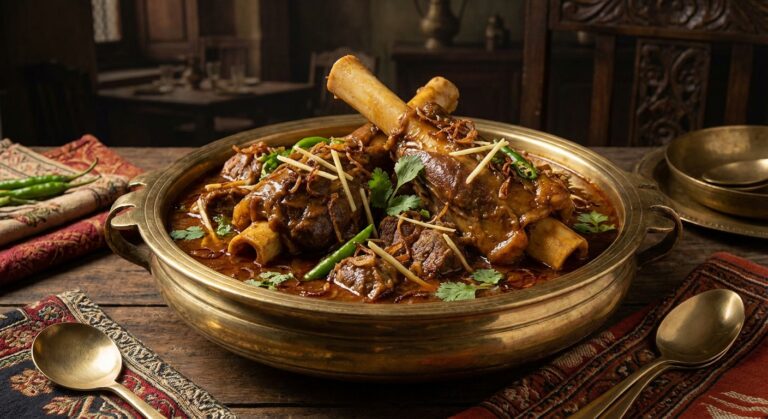
Arbi Chicken Shorba — Ready in 10 Minutes
When time is short and hunger is real, few dishes deliver as much comfort and flavour as arbi chicken shorba. This is the kind of recipe that seasoned home cooks swear by — a quick, soul-warming chicken and taro root stew that comes together in about 10 minutes of active cooking. Shorba is a light, brothy preparation that traces its roots to Mughlai and Awadhi kitchens, where it was traditionally served as a restorative first course or as a soothing meal for the unwell. Unlike heavy curries, shorba is thin, aromatic, and easy on the stomach, making it ideal for everyone from young children to elderly family members.
The combination of chicken and arbi (taro root) is a classic pairing in Pakistani and North Indian home cooking. The chicken provides lean protein and a savoury depth, while the arbi adds a starchy, almost potato-like body that thickens the broth naturally as it cooks. The result is a light yet satisfying stew with a silky broth, tender pieces of chicken, and soft, creamy taro that practically melts on the tongue. The spice profile is deliberately mild — warm with turmeric, gentle with cumin, and rounded with a touch of garam masala — so the natural flavours of the chicken and arbi shine through. This is comfort food in its purest form: simple, wholesome, and deeply nourishing.
Ingredients
The ingredient list is intentionally short. This dish does not need a dozen spices or complicated techniques — it relies on the quality of its core ingredients and the speed of its preparation.
- Chicken — 500 grams, boneless or bone-in pieces (bone-in adds more flavour to the broth)
- Arbi (taro root) — 300 grams, peeled and cut into 1-inch cubes
- Oil or ghee — 2 tablespoons
- Onion — 1 medium, finely sliced
- Ginger-garlic paste — 1 tablespoon
- Tomato — 1 medium, chopped (optional, for a slightly tangy broth)
- Turmeric powder — ½ teaspoon
- Red chilli powder — ½ teaspoon (adjust to taste)
- Cumin powder — ½ teaspoon
- Salt — to taste
- Water — 2 to 2½ cups, depending on how thin you want the shorba
- Fresh coriander — a small handful, chopped, for garnishing
- Garam masala — ¼ teaspoon, for finishing
Preparing the Arbi
Taro root has a naturally slimy texture when raw, which can be off-putting if you are not used to handling it. The key is to peel and cube the arbi, then rinse the pieces thoroughly under running cold water. Some cooks like to soak the cubed arbi in a bowl of water with a teaspoon of salt or lemon juice for 5 minutes before cooking — this helps reduce the sliminess further. Pat the pieces dry with a kitchen towel before adding them to the pot. If you cannot find fresh taro root, frozen arbi cubes work in a pinch, though fresh is always preferred for its superior texture and flavour.
The Quick Cooking Method
This is where the 10-minute promise comes into play. The entire cooking process is streamlined so that everything comes together rapidly without sacrificing flavour.
Heat the oil or ghee in a pressure cooker or a deep pot over high heat. If using a pressure cooker, this is the fastest method and will have the dish ready in under 10 minutes. Add the sliced onion and cook, stirring frequently, for 2 minutes until it turns translucent and starts to golden at the edges. You do not need to caramelize the onions — just soften them enough to build a flavour base. Add the ginger-garlic paste and stir for 30 seconds until the raw smell disappears.
Add the chicken pieces and sear on high heat for 2 to 3 minutes, turning them once or twice. The chicken should develop light golden spots on the outside — this searing adds flavour through the Maillard reaction. Add the turmeric, red chilli powder, cumin powder, and salt. Stir well to coat the chicken evenly in the spices. If using tomato, add it now and stir for 1 minute until it softens slightly.
Pour in 2 to 2½ cups of water and bring everything to a rolling boil. Add the arbi cubes, stir once, and if using a pressure cooker, lock the lid and cook for 2 whistles on high heat, then turn off the flame. If using an open pot, cover and simmer on medium heat for 12 to 15 minutes until the arbi is fork-tender and the chicken is cooked through. The broth should be thin and light — adjust the water if it has reduced too much.
Finishing and Serving
Open the pressure cooker or remove the pot lid. The arbi should be soft but still holding its shape — not mushy. Taste the broth and adjust the salt. Sprinkle the garam masala and chopped fresh coriander over the top. Give it a gentle stir. The shorba is ready.
Ladle it into deep bowls and serve immediately. The broth is best when piping hot — it has a wonderful, warming quality that settles the stomach and soothes the senses. Accompany with plain steamed basmati rice or warm rotis. For a more complete meal, serve alongside a simple kachumber salad (diced onion, tomato, cucumber with lemon juice and salt) and a bowl of plain yoghurt.
Why This Recipe Works in 10 Minutes
The speed of this recipe comes down to several deliberate choices:
- Boneless chicken cooks fast. If you use boneless breast or thigh pieces, they cook through in just 3 to 4 minutes of simmering. Bone-in pieces take a minute or two longer but add more flavour to the broth — your call.
- Cubed arbi is small. Cutting the taro into 1-inch cubes ensures it cooks quickly and evenly. Larger pieces would take much longer to become tender.
- Pressure cooker is your friend. A pressure cooker cuts the cooking time roughly in half. Two whistles are all you need. If you do not have one, an open pot with a tight-fitting lid works fine — it just takes a few extra minutes.
- Minimal sautéing. Unlike a curry that requires 10 minutes of onion browning, this shorba needs only a quick 2-minute sauté. The thin broth does not need a deeply caramelised base.
Nutritional Benefits
Arbi chicken shorba is a surprisingly nutritious dish. Chicken is an excellent source of lean protein, essential for muscle repair and immune function. Taro root is rich in dietary fibre, potassium, and vitamins C and E. It is also lower in calories than potatoes and has a lower glycemic index, making it a better choice for those watching their blood sugar. The broth itself is hydrating and easy to digest, which is why shorba has traditionally been recommended for people recovering from illness. The mild spice level means it is gentle on the stomach while still providing the anti-inflammatory benefits of turmeric and the digestive benefits of cumin.
Tips for the Best Shorba
- Do not overcook the arbi. It should be tender but hold its shape. Overcooked arbi will disintegrate and make the broth starchy and cloudy.
- Skim the fat if desired. If your chicken releases a lot of fat during cooking, you can skim it off the top before serving for a lighter shorba. Some prefer to leave it for extra flavour.
- Use fresh arbi when possible. Fresh taro has a creamier texture and milder flavour than frozen. If using frozen, do not thaw — add it directly to the pot.
- Add a squeeze of lemon. A small squeeze of fresh lemon juice at the end brightens the broth and adds a subtle tanginess that lifts the whole dish.
- Garnish generously. Fresh coriander is not just decorative — it adds a fresh, herbaceous note that complements the warm spices beautifully. Do not be shy with it.
Variations to Try
This shorba is a versatile base that you can adapt to your taste:
- Arbi gosht shorba — replace the chicken with mutton or lamb pieces. Increase the cooking time accordingly (pressure cook for 5 to 6 whistles) until the meat is tender.
- Vegetarian shorba — skip the chicken entirely and use vegetable stock instead of water. Add a handful of moong dal (split yellow lentils) for protein.
- Creamy shorba — blend a small portion of the cooked arbi and stir it back into the broth for a thicker, creamier consistency without adding any cream.
- Hariyali shorba — blend a handful of fresh coriander and mint leaves into a paste and stir it in at the end for a green, herbaceous version.
Frequently Asked Questions
How do I prevent the arbi from making the broth slimy?
Taro root naturally contains mucilage, which can create a slimy texture. To minimise this, rinse the peeled and cubed arbi under cold running water for a minute before cooking. Soaking in salted or lemon-water for 5 minutes also helps. Cooking the arbi in a rapidly boiling broth rather than adding it to cold water further reduces sliminess. The pressure cooker method is particularly effective because the high heat breaks down the mucilage quickly.
Can I use sweet potato instead of taro?
Sweet potato is a reasonable substitute in terms of cooking time and texture, though the flavour will be sweeter. If you use sweet potato, reduce the cooking time slightly as it cooks faster than taro. The dish will still be delicious, just with a different flavour profile. Some cooks also use a combination of both for added complexity.
Is this dish suitable for babies and toddlers?
Yes, with some modifications. Omit the red chilli powder entirely and use only a pinch of turmeric and cumin. Ensure the arbi is cooked until very soft and the chicken is shredded into small pieces. The thin broth is easy for small children to swallow and digest. Always check the temperature before serving to young children.
How long does leftover shorba keep?
Refrigerate in an airtight container for up to 2 days. The broth may thicken slightly as the arbi continues to absorb liquid. Add a splash of water when reheating to restore the consistency. This dish does not freeze well because the taro changes texture upon thawing, becoming somewhat grainy. It is best enjoyed fresh.


Reader Comments
Leave a Comment
No comments yet. Be the first to share your thoughts!