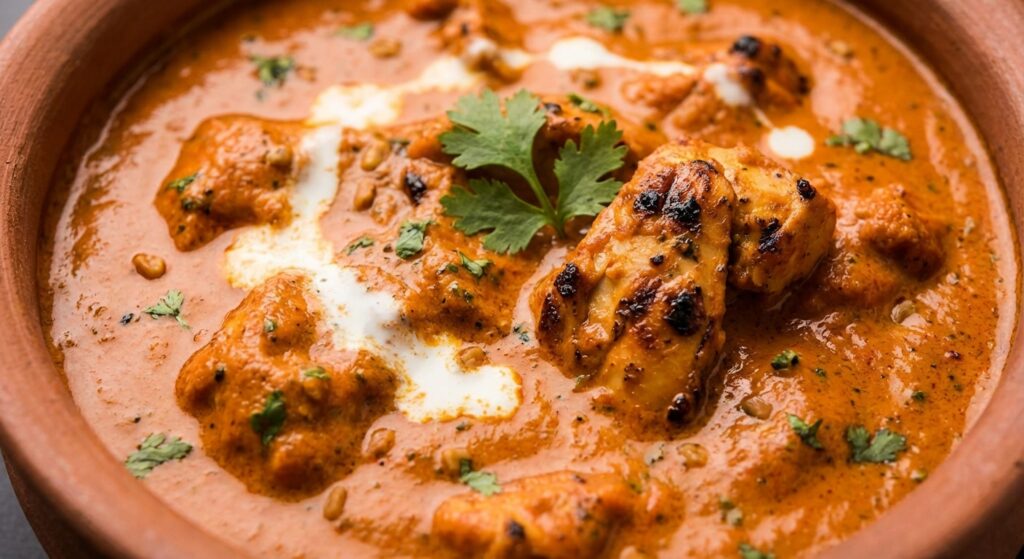
How to Make Restaurant-Style Butter Chicken at Home
Butter chicken — or murgh makhani — is one of the most iconic Indian dishes in the world. The silky orange gravy, the smoky charred chicken, and that rich, buttery finish. Every Indian restaurant has its own version, and somehow it always tastes better than what you make at home. The difference is not a secret ingredient. It is a set of techniques that restaurants use, and once you understand them, you can replicate the exact taste in your own kitchen.
This guide breaks down every step — from the marinade to the final dhungar smoke — so you can make butter chicken that genuinely rivals your favourite restaurant.
Why Restaurant Butter Chicken Tastes Different
The answer lies in three things: char, patience, and fat. Restaurants char the chicken in a tandoor at over 400°C, which creates a smoky, caramelised crust that pan-frying cannot match. They cook the tomato base for 30–40 minutes until it reduces to a thick, oil-separated paste. And they finish with generous amounts of butter, cream, and cashew paste — never skimping on the richness that defines this dish.
At home, most people rush the tomato base, skip the char, and use too little fat. Fix those three things and your butter chicken transforms overnight.
Ingredients
For the Chicken Marinade
- 700g boneless chicken thighs — cut into 2-inch pieces (thighs stay juicier than breast)
- 1/2 cup thick yoghurt — hung curd or Greek yoghurt works best
- 2 tablespoon ginger-garlic paste
- 2 tablespoon Kashmiri red chili powder — for colour without excessive heat
- 1 tablespoon lemon juice
- 1 teaspoon garam masala
- 1 teaspoon turmeric powder
- 1 teaspoon salt
- 1 tablespoon mustard oil — optional, adds authentic tang
For the Gravy
- 4 tablespoon butter — divided, use unsalted for better control
- 1 tablespoon vegetable oil — prevents butter from burning
- 2 large onions — finely pureed
- 6–8 ripe tomatoes — pureed (about 600g)
- 2 tablespoon ginger-garlic paste
- 2 tablespoon Kashmiri red chili powder
- 1 teaspoon turmeric powder
- 1 teaspoon cumin powder
- 1 teaspoon coriander powder
- 20–25 cashews — soaked in warm water for 20 minutes, then blended to a smooth paste
- 1/2 cup heavy cream
- 1 tablespoon sugar — or honey, to balance acidity
- 2 tablespoon kasuri methi — dried fenugreek leaves, crushed between palms
- 1 teaspoon salt — adjust to taste
- 1/2 cup water — as needed
For the Dhungar (Smoke Finish)
- 1 small piece natural charcoal — about 1 inch, heated until red hot
- 1 tablespoon ghee — to pour over the charcoal
Step-by-Step Instructions
Step 1: Marinate the Chicken (Minimum 2 Hours, Overnight Best)
In a large bowl, combine the chicken pieces with yoghurt, ginger-garlic paste, Kashmiri chili powder, lemon juice, garam masala, turmeric, salt, and mustard oil. Mix thoroughly so every piece is coated. Cover and refrigerate for at least 2 hours. Overnight marination gives the best results — the yoghurt tenderises the meat and the spices penetrate deeply.
Why this matters: The yoghurt breaks down proteins in the chicken, making it incredibly tender. Skipping the marination or using too short a time results in chewy, flavourless chicken.
Step 2: Char the Chicken (The Most Important Step)
Preheat your oven broiler to the highest setting. Place marinated chicken pieces on a wire rack over a baking tray. Broil for 6–8 minutes per side until you see dark charred spots on the surface. The chicken does not need to be fully cooked — it will finish cooking in the gravy.
Alternative methods if you do not have a broiler:
- Grill pan: Heat until smoking, cook chicken pieces for 3–4 minutes per side on high heat
- Kitchen torch: Torch each piece until charred spots appear
- Gas flame: Hold chicken pieces with tongs directly over the flame for a few seconds per side
- Air fryer: 200°C for 12 minutes, shaking halfway
The charred bits are what create the smoky, tandoori flavour. This is non-negotiable for restaurant-quality butter chicken.
Step 3: Build the Tomato Base (30–40 Minutes, Do Not Rush)
Heat 2 tablespoon butter and 1 tablespoon oil in a heavy-bottomed pan over medium heat. Add the pureed onions and cook for 8–10 minutes until golden brown and the raw smell disappears. Add ginger-garlic paste and cook for 2 minutes until fragrant.
Add the tomato puree, Kashmiri chili powder, turmeric, cumin powder, and coriander powder. Stir well. Now the critical part: cook this mixture on medium-low heat for 30–40 minutes, stirring occasionally, until the oil separates from the masala and floats on top. The mixture will darken and reduce significantly.
Why 30–40 minutes: Tomatoes contain a lot of water. You need to cook out all the water and allow the spices to bloom in the fat. Rushing this step results in a raw-tasting, watery gravy. The oil separating is your visual cue that the base is ready.
Step 4: Blend for Silky Smooth Texture
Once the tomato base is cooked and oil has separated, let it cool for 5 minutes. Transfer to a blender and blend until completely smooth. This is what gives restaurant butter chicken its signature silky texture. Strain through a fine mesh sieve if you want it extra smooth — restaurants do this.
Pour the blended sauce back into the pan.
Step 5: Add Cashew Paste and Cream
Add the soaked and blended cashew paste to the gravy. Stir well and cook for 5 minutes on low heat. The cashew paste thickens the gravy and adds a subtle sweetness and richness that cream alone cannot achieve.
Add 1/2 cup water to adjust the consistency. The gravy should coat the back of a spoon — not too thick, not too thin. Bring to a gentle simmer.
Step 6: Add the Charred Chicken
Add the charred chicken pieces to the gravy. Stir gently to coat every piece. Simmer on low heat for 10–12 minutes until the chicken is fully cooked through and has absorbed some of the gravy flavours. Do not boil vigorously — gentle simmering keeps the gravy smooth.
Step 7: Finish with Butter, Cream, and Kasuri Methi
Turn off the heat. Add 2 tablespoon cold butter and stir until it melts and emulsifies into the sauce. Add the heavy cream and stir gently. Sprinkle the crushed kasuri methi over the top and fold it in.
Why cold butter: Adding cold butter to a hot sauce creates an emulsion — the butterfat disperses evenly, giving the gravy a glossy, velvety finish. Warm butter would just melt into oil and separate.
Why kasuri methi last: Dried fenugreek leaves lose their aroma if cooked too long. Adding them in the final minute preserves their distinctive, slightly bitter fragrance that defines butter chicken.
Step 8: Dhungar Smoke Finish (Optional but Authentic)
Place a small steel bowl or piece of aluminium foil in the centre of the curry. Heat a piece of natural charcoal directly on a gas flame until it is red hot and glowing. Place the hot charcoal in the bowl. Pour 1 tablespoon ghee over the charcoal — it will immediately start smoking. Cover the pan tightly with a lid and let the smoke infuse for 2–3 minutes. Remove the charcoal bowl and serve.
This step adds an authentic smoky aroma that makes people think you cooked it in a tandoor. It takes 2 minutes and transforms the dish completely.
Common Mistakes That Ruin Butter Chicken
- Using chicken breast: Breast dries out quickly. Always use boneless thighs for juicier, more flavourful results.
- Skipping the char: Without charred chicken, you get a boiled, flat-tasting dish. The broiler or grill pan is essential.
- Rushing the tomato base: Cooking tomatoes for 10 minutes is not enough. You need 30–40 minutes for the raw taste to disappear and the oil to separate.
- Adding cream too early: Cream splits if boiled. Always add it at the end, off the heat.
- Skipping kasuri methi: This is the ingredient that makes butter chicken taste like butter chicken. There is no substitute.
- Using too much water: The gravy should be thick enough to coat the chicken. Add water sparingly.
Variations
Paneer Butter Masala
Replace the chicken with 400g paneer cubes. Pan-fry the paneer until golden on each side before adding to the gravy. The sauce and technique remain identical.
Dhaba Style Butter Chicken
Use a heavier hand with spices, add a tablespoon of crushed kasuri methi earlier in the cooking, and skip the cream. The result is a more rustic, spicier version served at roadside dhabas across North India.
Mughlai Rich Version
Add 2 tablespoon melon seeds (magaz) along with the cashews. Use 1 cup cream instead of 1/2 cup. Finish with a tablespoon of rose water. This is the ultra-rich version served at weddings and celebrations.
Serving Suggestions
- Butter naan — the classic pairing, perfect for mopping up the gravy
- Jeera rice — cumin-flavoured basmati rice complements the rich gravy
- Laccha paratha — flaky layered bread for a more filling meal
- Steamed basmati rice — simple and lets the butter chicken shine
Storage and Reheating
Butter chicken tastes even better the next day as the flavours meld. Store in an airtight container in the refrigerator for up to 3 days. Reheat gently on the stovetop over low heat, adding a splash of water if the gravy has thickened. Do not microwave on high — it causes the cream to separate. You can freeze butter chicken for up to 1 month. Thaw overnight in the refrigerator before reheating.
Nutrition (per serving, serves 4)
Calories: 420 kcal | Protein: 32g | Carbs: 12g | Fat: 28g | Fibre: 3g
Frequently Asked Questions
Can I make butter chicken without a tandoor?
Yes. Use your oven broiler on the highest setting, a grill pan on the stovetop, or even a kitchen torch to char the chicken. The goal is to get dark charred spots on the surface — this creates the smoky flavour. A tandoor is not necessary for excellent results at home.
Why is my butter chicken gravy watery?
You likely did not cook the tomato base long enough. The tomatoes need 30–40 minutes on medium-low heat until the oil separates and the mixture reduces to a thick paste. Also, make sure your cashew paste is smooth and thick — blend soaked cashews with minimal water.
Can I use chicken breast instead of thighs?
You can, but thighs are strongly recommended. Breast meat is lean and dries out quickly, especially during the broiling step. If you must use breast, reduce the broiling time to 4–5 minutes per side and cut the pieces larger to retain moisture.
What can I substitute for kasuri methi?
There is no direct substitute for kasuri methi (dried fenugreek leaves). It provides a distinctive bitter-aromatic flavour that defines butter chicken. If absolutely unavailable, add a tiny pinch of methi seeds (fenugreek seeds) — use sparingly as they are much more bitter. Kasuri methi is available at Indian grocery stores and online.
How do I get the bright orange restaurant colour?
The orange colour comes from Kashmiri red chili powder, not food colouring. Use 2–3 tablespoon of Kashmiri chili for the marinade and gravy. If you want an even deeper colour, add a pinch of degi mirch (a hotter variety) or a tiny drop of orange food colour — though authentic recipes rely on Kashmiri chili alone.
Can I make butter chicken ahead of time?
Yes. Butter chicken actually tastes better the next day as the flavours develop and meld. Make it up to 2 days ahead and store in the refrigerator. Reheat gently on the stovetop. For longer storage, freeze for up to 1 month. The gravy may thicken on storage — add a splash of water while reheating.


Reader Comments
Leave a Comment
No comments yet. Be the first to share your thoughts!