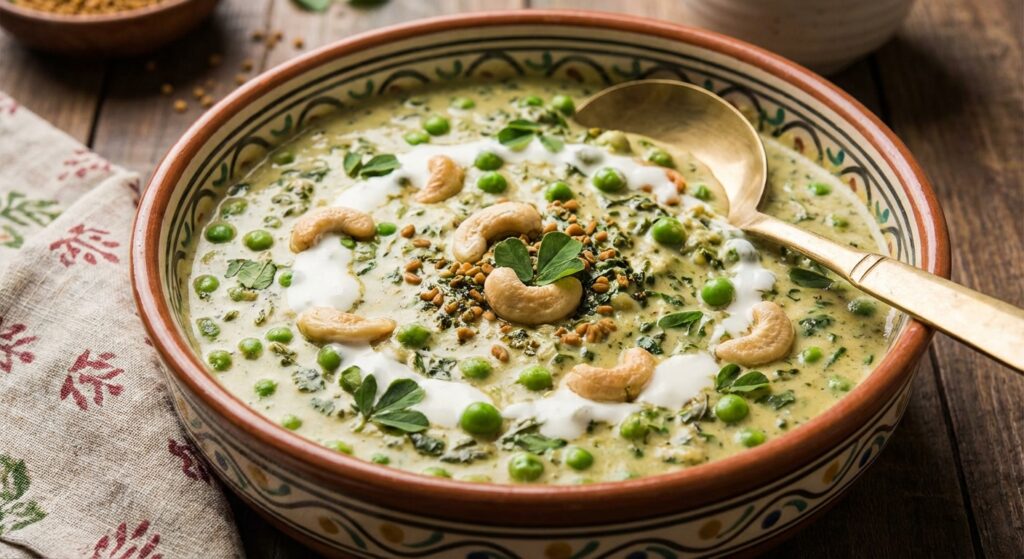
Methi Matar Malai – Creamy Restaurant Style Fenugreek Curry
If there is one dish that perfectly captures the elegance and richness of North Indian restaurant cuisine, it is methi matar malai. This velvety, cream-based curry combines the slightly bitter, herbaceous flavor of fresh fenugreek leaves with the sweetness of green peas and the luxurious richness of cream and cashew paste. The result is a dish that is mild enough for children, sophisticated enough for formal dinners, and flavorful enough to satisfy even the most discerning palate. It is a vegetarian curry that does not feel like a compromise. It feels like a celebration.
What makes methi matar malai particularly special is the artful balance of flavors. The bitterness of methi is tamed through careful blanching and balanced by the natural sweetness of the peas and the richness of the cream base. The cashew paste adds body and a subtle nuttiness, while the mild spices provide warmth without overwhelming the delicate flavors of the main ingredients. In this comprehensive guide, we will teach you how to make this creamy restaurant-style curry at home, including the secrets to blanching methi, creating the perfect cream base, and balancing the flavors for a truly memorable dish.
Blanching Methi: The Essential First Step
The way you handle the fenugreek leaves is the single most important factor in determining the success or failure of methi matar malai. Fresh methi has a pronounced bitterness that, while appealing in some preparations, can be overwhelming in a delicate cream-based curry. The solution is blanching, a technique that reduces the bitterness while preserving the bright green color and fresh flavor of the leaves.
To blanch methi properly, start by thoroughly washing the fresh fenugreek leaves in several changes of cold water. Methi grows close to the ground and often has sand, dirt, and small insects clinging to the leaves. Fill a large basin with water, submerge the leaves, and swish them around vigorously. Lift the leaves out and repeat until the water runs clear with no visible sediment.
Bring a large pot of water to a rolling boil. Add 1 tablespoon of sugar to the boiling water. The sugar helps neutralize the bitter compounds in the methi and preserves the green color. Add the washed fenugreek leaves to the boiling water and blanch for exactly 60 seconds. No more, no less. Over-blanching will cause the leaves to lose their color and become mushy, while under-blanching will not reduce the bitterness sufficiently.
Immediately transfer the blanched leaves to a bowl of ice water. This shocking technique stops the cooking process instantly and locks in the bright green color. Let the leaves cool in the ice water for 2 minutes, then drain and squeeze out all excess water. The squeezing step is crucial as excess water will dilute the cream base and make the curry watery. Once squeezed, roughly chop the methi leaves and set them aside.
This blanching process reduces the bitterness of methi by approximately 50 to 60 percent while retaining its distinctive flavor and nutritional benefits. The result is fenugreek that is mild enough for the cream-based curry but still recognizable as methi with its characteristic herbaceous taste.
The Cream Base: Building Richness
The cream base is what gives methi matar malai its signature velvety texture and luxurious mouthfeel. Creating this base requires a combination of ingredients that work together to produce a smooth, rich, and well-balanced sauce. The key components are cashew paste, fresh cream, and a carefully cooked onion-tomato masala.
To make the cashew paste, soak 15 to 20 cashew nuts in hot water for 30 minutes. Drain and grind to a smooth paste with a few tablespoons of fresh water. The cashew paste serves multiple purposes in this dish. It adds a subtle, nutty sweetness that complements the fenugreek beautifully. It provides a thick, creamy texture that gives the curry its body. And it helps stabilize the cream, preventing it from splitting during cooking.
For the masala base, heat 2 tablespoons of butter or ghee in a pan over medium heat. Add 1 teaspoon of cumin seeds and let them sizzle for 30 seconds. Add 2 large onions, finely chopped, and cook for 10 to 12 minutes until they are completely soft and lightly golden. The onions should not be browned too much as this would darken the color of the curry. Add 1 tablespoon of ginger-garlic paste and cook for 1 minute.
Add 2 medium tomatoes, finely chopped, and cook for 8 to 10 minutes until they break down completely and the oil separates from the mixture. Season with 1 teaspoon of salt, 1/2 teaspoon of turmeric powder, and 1 teaspoon of white pepper powder. White pepper is preferred over black pepper in this dish because it provides heat without adding dark specks to the creamy white sauce.
Let the masala cool slightly, then transfer it to a blender and blend to a perfectly smooth puree. Strain the puree through a fine mesh sieve to remove any fibrous particles from the onions or tomatoes. This straining step is what gives restaurant-style methi matar malai its signature silky-smooth texture. Home-cooked versions often skip this step, resulting in a slightly grainy sauce.
The Cooking Technique: Bringing It All Together
With all the components prepared, it is time to bring them together into the final curry. The cooking technique is straightforward but requires attention to heat levels and timing to ensure each ingredient is cooked to perfection.
Pour the strained masala puree back into the pan over medium-low heat. Add the cashew paste and stir to combine. Cook this base for 5 to 6 minutes, stirring frequently, until it thickens slightly and the flavors meld together. The base should be smooth, creamy, and a pale golden color.
Add 1 cup of fresh or frozen green peas. If using fresh peas, blanch them separately for 3 minutes before adding. If using frozen peas, they can go in directly. Cook the peas in the masala base for 5 minutes until they are tender but still have a slight bite. The peas should retain their bright green color and sweet flavor.
Add the blanched and chopped methi leaves. Stir gently to distribute them evenly throughout the curry. Cook for 3 to 4 minutes to allow the methi flavor to integrate with the cream base. The curry will take on a beautiful greenish-golden hue from the combination of the methi and the turmeric.
Add 1/2 cup of fresh cream and 1/2 cup of milk. Stir gently to combine. The cream and milk create the signature luscious consistency of the dish. Cook for another 3 to 4 minutes on low heat. Do not boil the curry after adding the cream as it may split. If the curry is too thick, add a little more milk to reach the desired consistency. If it is too thin, simmer for a few more minutes to reduce.
Finish with 1 tablespoon of butter, 1/2 teaspoon of garam masala, and salt to taste. The butter adds a final touch of richness and a beautiful sheen to the surface. Stir gently and remove from heat. The curry is ready to serve.
Balancing the Bitterness: The Art of Methi
The bitterness of fenugreek is both its greatest asset and its biggest challenge. In the right balance, it adds a sophisticated, herbaceous quality that elevates the dish. Too much bitterness, and it overwhelms the other flavors and becomes unpleasant. Mastering the balance of bitterness is the hallmark of a skilled cook.
Beyond blanching, there are several additional techniques for controlling bitterness. Adding a small amount of sugar, about 1 teaspoon, to the curry helps counteract the bitter taste without making the dish noticeably sweet. The cream and butter in the recipe also help mellow the bitterness by coating the taste buds and creating a rich, fatty barrier that reduces the perception of bitter flavors.
The quantity of methi you use also matters. For a curry that serves 4 to 6 people, 2 bunches of fresh fenugreek, approximately 200 grams of leaves, is the ideal amount. Using more methi than this can make the curry too bitter, while using less will result in a dish where the fenugreek flavor is barely noticeable.
The timing of adding the methi is also important. Adding it towards the end of the cooking process preserves more of its fresh, herbaceous flavor. If you cook the methi for too long, it will lose its distinctive taste and the bitterness will intensify as the leaves break down and release more of their bitter compounds.
Variations to Try
While the classic methi matar malai is a masterpiece on its own, there are several variations that you can explore to keep things interesting:
- Paneer Methi Matar Malai: Add cubes of fresh paneer to the curry for a protein-rich version that is even more substantial. The mild, milky flavor of paneer pairs beautifully with the fenugreek and cream.
- Methi Matar Malai with Chicken: For a non-vegetarian version, add cooked chicken pieces to the curry. The chicken absorbs the cream base wonderfully and adds a meaty dimension to the dish.
- Dry Version: Reduce the cream and milk for a thicker, drier version that can be served as a side dish with roti or naan. This concentrated version has a more intense flavor.
- Low-Calorie Version: Replace the cream with Greek yogurt and the butter with olive oil for a lighter version that still maintains a creamy texture. Add the yogurt at the end and heat gently to prevent curdling.
- Smoky Version: Use the dhungar method by placing a small piece of hot charcoal in a bowl set in the curry, pouring a few drops of ghee over it, and covering for 2 minutes. This adds a wonderful smoky dimension.
Common Mistakes to Avoid
- Not blanching the methi: Skipping the blanching step will result in a curry that is unpleasantly bitter. Always blanch the fenugreek leaves for 60 seconds and shock them in ice water.
- Browning the onions too much: The onions should be cooked until soft and lightly golden, not dark brown. Dark onions will discolor the curry and add an unwanted sweetness.
- Boiling after adding cream: Cream can split if boiled. Always add the cream on low heat and never let the curry come to a full boil after adding it.
- Skipping the straining step: Straining the masala puree is what gives the curry its silky-smooth restaurant-quality texture. Skipping it results in a grainy, less refined sauce.
- Using dried fenugreek instead of fresh: While dried fenugreek or kasuri methi can be used as a garnish, it cannot replace fresh methi as the main ingredient. The flavor profile is completely different.
Health Benefits of Methi Matar Malai
Despite its rich and indulgent taste, methi matar malai offers several health benefits that make it more than just a comfort food. Fenugreek leaves are packed with nutrients, including iron, calcium, magnesium, and vitamins A, C, and K. They are also rich in antioxidants and have been shown to have anti-diabetic properties, helping to regulate blood sugar levels.
Green peas are an excellent source of plant-based protein, dietary fiber, and essential vitamins. They contain high levels of vitamin K, which is important for bone health, and vitamin C, which supports immune function. The combination of methi and peas in this curry provides a significant nutritional boost in a delicious, accessible form.
The cashews in the curry provide healthy monounsaturated fats, protein, and important minerals like zinc and magnesium. While the cream adds calories, it also provides calcium and vitamin D when made from fortified milk. When enjoyed as part of a balanced diet, methi matar malai is a nutritious and satisfying meal that nourishes the body as much as it pleases the palate.
Serving Suggestions
Methi matar malai is best served with warm, freshly made Indian breads. Butter naan is the classic pairing, as the soft, pillowy bread is perfect for scooping up the creamy curry. Laccha paratha, with its flaky layers, is another excellent choice. For a simpler accompaniment, serve with hot phulkas or tandoori roti.
Steamed basmati rice or jeera rice also works beautifully, allowing the rice to absorb the creamy sauce. For a complete meal, serve the curry alongside a dal, a dry vegetable preparation, and a fresh salad. A glass of cold, sweet lassi or a refreshing mango shake completes the meal perfectly.
For a dinner party presentation, serve the methi matar malai in a traditional copper handi or a decorative bowl. Garnish with a swirl of fresh cream, a few whole cashews, a sprinkle of garam masala, and a few fresh methi leaves. The visual presentation of this dish is almost as impressive as its taste.
Frequently Asked Questions
Can I use dried fenugreek leaves instead of fresh?
Dried fenugreek leaves, known as kasuri methi, can be used as a supplement but not as a complete replacement for fresh methi. Kasuri methi has a more concentrated, slightly different flavor that is excellent as a finishing garnish but lacks the fresh, herbaceous quality that fresh methi provides. If fresh methi is not available, use kasuri methi as follows: crush 2 tablespoons of dried leaves between your palms and add them at the end of cooking. You can also add a handful of fresh spinach to compensate for the volume and freshness lost from omitting fresh methi.
How do I prevent the cream from splitting in the curry?
Cream splits when it is exposed to high heat or rapid temperature changes. To prevent splitting, always add the cream on low heat and stir it in gradually. Never let the curry come to a full boil after adding cream. If you need to reheat the curry, do so gently over low heat, stirring constantly. Adding a tablespoon of cornstarch dissolved in cold water before adding the cream can also help stabilize it. Additionally, full-fat cream is more stable than low-fat versions because the higher fat content is less prone to separating.
Can I make this recipe vegan?
Yes, you can make a vegan version of methi matar malai by substituting the dairy ingredients. Replace the cream with full-fat coconut cream, the butter with olive oil or vegan butter, and the milk with unsweetened oat milk or almond milk. Use cashew paste as usual for the base. The coconut cream adds a slightly different flavor profile but creates a similarly rich and creamy texture. The result is delicious in its own right while being completely plant-based.
How long does methi matar malai last in the refrigerator?
Properly stored in an airtight container, methi matar malai keeps well in the refrigerator for up to 3 days. The flavors actually improve overnight as the fenugreek, cream, and spices continue to meld together. Reheat gently on the stovetop over low heat, adding a splash of milk if the curry has thickened too much. This curry does not freeze well due to the cream base, which can separate and become grainy upon thawing. It is best enjoyed fresh or within a day or two of preparation.


Reader Comments
Leave a Comment
No comments yet. Be the first to share your thoughts!