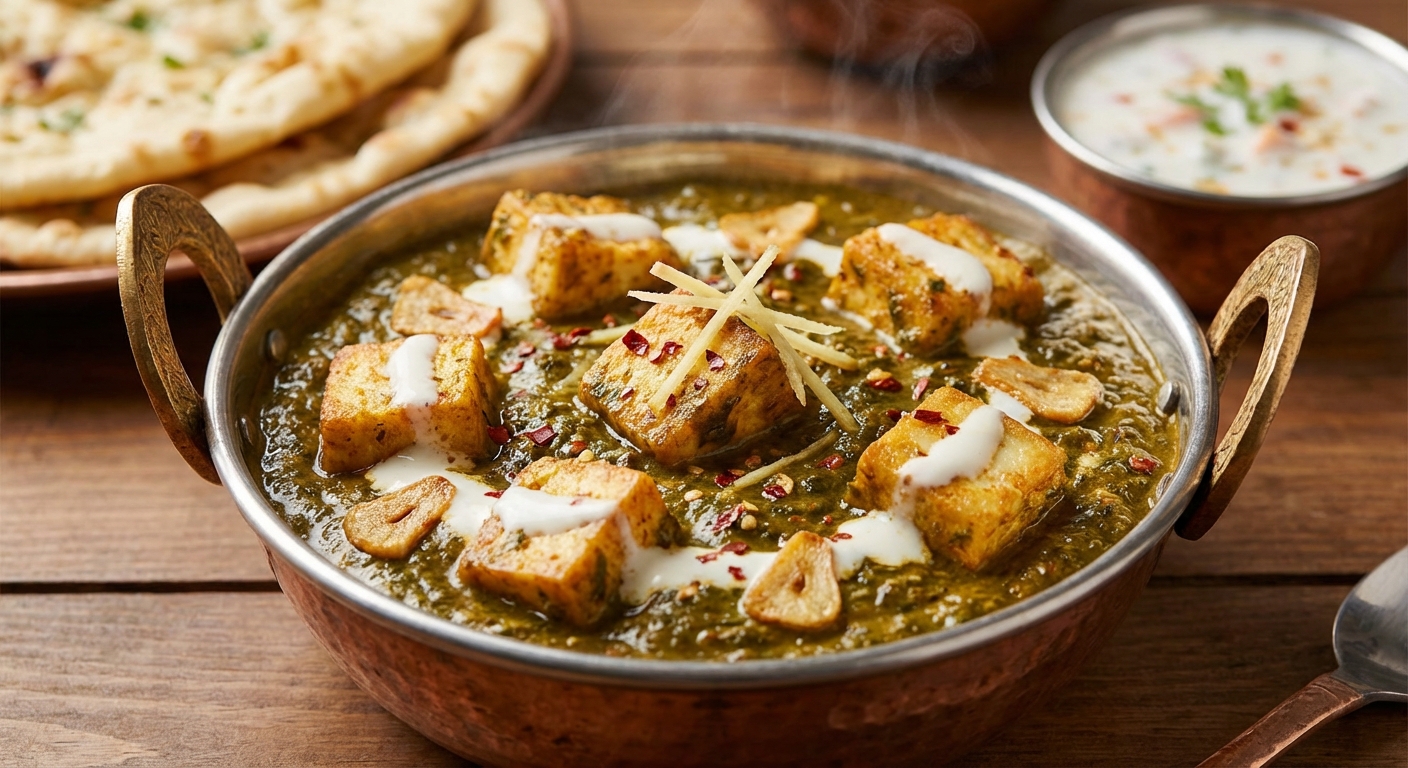
Garlic-Loaded Ultra Creamy Lasooni Palak Paneer
Palak paneer is one of the most beloved vegetarian dishes in the Indian subcontinent — a harmonious combination of fresh spinach purée and cubes of soft, mild paneer cheese. It is the dish that converts vegetarians into food enthusiasts and meat-eaters into spinach lovers. But this version takes the classic a step further by loading it with garlic — the kind of bold, unapologetic garlic flavour that hits you the moment the dish arrives at the table. Lasooni palak paneer, as it is known, is garlic-forward, deeply creamy, and fragrant with a carefully balanced blend of spices that complement rather than overpower the star ingredients: the spinach and the paneer.
The concept is simple but the execution matters enormously. The spinach must be bright green, silky smooth, and free of any raw, grassy taste. The paneer must be golden-seared on the outside and pillowy soft within. And the garlic must be cooked to that magical point where it is golden, nutty, and intensely aromatic — not raw, not burnt, but somewhere in the sweet spot in between. This recipe guides you through each of these elements with detailed techniques, so even if you have never made palak paneer before, you will end up with a restaurant-quality result that will impress everyone at the table.
Ingredients
For the spinach base:
- Fresh spinach (palak) — 500 grams (approximately 6 cups, loosely packed). Choose leaves that are vibrant green and free of yellow spots. This quantity will yield about 1½ to 2 cups of purée.
- Green chillies — 2-3, depending on your heat preference
- Ginger — 1-inch piece, roughly chopped
- Garlic — 4-5 cloves (for blanching with the spinach)
For the paneer:
- Paneer — 250 grams, cut into 1-inch cubes. Use fresh, homemade paneer if possible — it has a softer, creamier texture than store-bought.
- Oil or ghee — 1 tablespoon, for searing
For the garlic tadka (tempering):
- Ghee — 3 tablespoons. Ghee is strongly preferred over oil here — its nutty flavour is integral to the dish.
- Garlic — 10-12 cloves, thinly sliced. This is the “lasooni” part of the dish — a generous amount of sliced garlic that will be fried in ghee until golden.
- Cumin seeds (jeera) — 1 teaspoon
- Dried red chillies — 2-3, broken in half (optional, for visual appeal and a touch of heat)
For the gravy:
- Oil or ghee — 1 tablespoon
- Onion — 1 medium, finely chopped (optional — some purist recipes omit onion entirely)
- Tomato — 1 medium, finely chopped (optional, for a slight tanginess)
- Cumin powder — ½ teaspoon
- Coriander powder — ½ teaspoon
- Garam masala — ½ teaspoon
- Turmeric powder — a pinch (just for a hint of colour)
- Salt — to taste
- Cream — 2-3 tablespoons (fresh cream or cooking cream)
- Butter — 1 tablespoon (optional, for finishing)
Preparing the Spinach
The first and most important step is to blanch the spinach correctly. This technique preserves the vibrant green colour while removing the raw, slightly bitter taste of fresh spinach. Bring a large pot of water to a rolling boil. While the water heats, wash the spinach thoroughly in several changes of cold water to remove any grit or sand. When the water is boiling, add the spinach leaves along with the green chillies, ginger, and the 4 to 5 cloves of garlic. Blanch for exactly 2 minutes — no more. The leaves should be wilted but still bright green. Immediately transfer the blanched spinach to a bowl of ice-cold water (an ice bath). This shocking step stops the cooking process instantly and locks in the green colour. If you skip the ice bath, the residual heat will continue cooking the spinach, and it will turn an unappetizing olive-brown.
After 2 minutes in the ice bath, drain the spinach well. Squeeze out as much excess water as possible — wet spinach will make your gravy watery. Transfer to a blender and blend to a smooth, silky purée. Do not add water while blending — the residual moisture in the spinach is enough. If the blender struggles, add a tablespoon of milk instead of water to help it along. The purée should be thick, smooth, and a vivid, beautiful green. Set aside.
Searing the Paneer
Heat 1 tablespoon of oil or ghee in a non-stick pan over medium-high heat. When the oil is hot, add the paneer cubes in a single layer. Do not move them for the first minute — let them develop a golden crust on the bottom. Flip and sear the other sides until the paneer is golden on at least two sides. This searing serves two purposes: it adds a nutty, toasted flavour to the paneer and creates a slightly firm exterior that holds its shape when simmered in the gravy. Remove the seared paneer and set aside on a plate. Some cooks like to soak the seared paneer in warm water to keep it soft — this is a good trick if you are not using the paneer immediately.
Making the Garlic Tadka
This is the heart of the lasooni palak paneer. In the same pan, add 3 tablespoons of ghee over medium heat. When the ghee is hot and shimmering, add the cumin seeds. Let them sizzle and crackle for 10 seconds. Add the sliced garlic — all 10 to 12 cloves’ worth. Stir and fry the garlic for 2 to 3 minutes, watching carefully. The garlic will go through stages: first it will be pale and soft, then it will start to turn light golden, and finally it will reach a deep golden-brown colour with a crisp texture. This is the stage you want — the garlic should be golden, slightly crispy, and intensely aromatic. If any pieces start to turn dark brown, remove them immediately as burnt garlic will make the entire dish bitter. Add the dried red chillies at the very end and stir for 10 seconds. This golden garlic in ghee is what gives lasooni palak paneer its name and its soul.
Building the Gravy
If using onion, add it to the pan now and cook for 3 to 4 minutes until softened and lightly golden. Add the tomato (if using) and cook for another 2 minutes until it softens. Add the cumin powder, coriander powder, turmeric, and a pinch of salt. Stir for 30 seconds to toast the spices. Now pour in the spinach purée. Stir well to combine with the garlic tadka and spice base. Cook on medium heat for 5 to 6 minutes, stirring frequently. The gravy will thicken slightly and the raw edge of the spinach will mellow into a smooth, rounded flavour. If the gravy is too thick, add a splash of water or milk to reach your desired consistency. Some prefer it thick and clinging; others like it slightly thinner and more pourable.
Stir in the cream and garam masala. Cook for another 2 minutes. Taste and adjust the salt. The gravy should taste rich, garlicky, and well-seasoned with a gentle warmth from the spices.
Final Assembly
Gently slide the seared paneer cubes into the spinach gravy. Stir very gently to coat the paneer without breaking the cubes. Cook for 2 to 3 minutes, just enough to heat the paneer through and allow it to absorb some of the gravy flavours. Turn off the heat. Add the tablespoon of butter and let it melt into the hot gravy. This finishing butter adds a glossy sheen and an extra layer of richness.
Transfer to a serving bowl. If you have any garlic tadka left in the pan, pour it over the top — those golden garlic slices and cumin seeds sitting on the surface of the green gravy look and taste incredible. Garnish with a swirl of cream, a few reserved garlic slices, and a sprinkle of garam masala.
Serving Suggestions
Lasooni palak paneer is best served hot, straight from the pan. Here is how to build a complete meal around it:
- Butter naan or garlic naan — the soft, pillowy bread is perfect for scooping up the thick, creamy gravy. This is the classic restaurant pairing.
- Tandoori roti — a slightly charred, whole-wheat roti from the tandoor adds a rustic, smoky element.
- Jeera rice or steamed basmati — cumin-tempered rice is a simple but elegant accompaniment that lets the palak paneer be the star.
- Paratha — a flaky, buttery paratha turns this into a truly indulgent meal.
- Mixed vegetable raita — a cooling side that balances the richness of the gravy.
- Papad (papadum) — a crispy papad on the side adds a satisfying textural contrast.
Expert Tips for the Best Lasooni Palak Paneer
- Do not overcook the spinach during blanching. Two minutes in boiling water is all you need. Over-blanching destroys the chlorophyll and turns the spinach brown. The ice bath is not optional — it is the difference between a vibrant green dish and a dull, unappetizing one.
- Use generous garlic in the tadka. The “lasooni” in the name means garlic-forward. Ten to twelve cloves sounds like a lot, but when fried in ghee, the garlic becomes mellow, nutty, and sweet rather than harsh and pungent. Do not be timid with the garlic — it is the defining flavour of this dish.
- Watch the garlic carefully during frying. The difference between golden and burnt garlic is about 30 seconds. Stay attentive, stir frequently, and remove the pan from heat the moment the garlic reaches a deep golden colour. Burnt garlic cannot be fixed — it will make the entire dish bitter.
- Use fresh paneer when possible. Homemade paneer or freshly made paneer from a trusted dairy has a softer, creamier texture than vacuum-packed store-bought paneer. If using store-bought, soak the cubes in warm salted water for 10 minutes before searing to soften them.
- Do not skip the cream. A few tablespoons of cream at the end transform the gravy from good to extraordinary. It rounds out the flavours, adds a silky mouthfeel, and tempers the intensity of the garlic and spices. Use fresh cream for the best result.
- Serve immediately. Palak paneer is at its best when served fresh and hot. The spinach can darken and the gravy can thicken excessively if left sitting. If you must hold it, keep it covered and warm, and stir in a splash of milk before serving to restore the consistency.
Nutritional Highlights
Lasooni palak paneer is not just delicious — it is genuinely nutritious. Spinach is one of the most nutrient-dense vegetables available, packed with iron, calcium, vitamins A, C, and K, folate, and antioxidants. Garlic is renowned for its immune-boosting and heart-health properties. Paneer provides protein and calcium, making this a well-rounded vegetarian main course. The ghee, while high in fat, contains butyric acid which is beneficial for gut health. Overall, this dish is a powerhouse of nutrition wrapped in incredible flavour.
Variations to Explore
- Vegan palak paneer — replace the paneer with firm tofu (seared the same way) and use coconut cream instead of dairy cream. The result is surprisingly close to the original.
- Palak chicken — replace the paneer with boneless chicken pieces, seared and then simmered in the spinach gravy until cooked through.
- Palak dal — add a cup of cooked yellow lentils (moong or masoor) to the spinach gravy for a protein-rich, lighter version.
- Smoky palak paneer — use the dhungar method (smoking technique) by placing a small piece of hot charcoal in a metal bowl set in the centre of the finished dish, drizzling a few drops of ghee on the coal, and covering the pot immediately to trap the smoke. This adds a tandoor-like smokiness.
- Palak paneer with methi — add a handful of fresh fenugreek leaves to the spinach during blanching for a more complex, slightly bitter flavour profile.
Frequently Asked Questions
Why is my palak paneer brown instead of green?
The most common cause is overcooking the spinach during blanching or not using the ice bath to shock it. Chlorophyll, the pigment that gives spinach its green colour, breaks down with prolonged heat exposure. To prevent this, blanch for exactly 2 minutes, transfer immediately to ice water, and blend quickly. Also, avoid cooking the spinach purée for too long in the gravy — 5 to 6 minutes is sufficient. Cooking longer will cause the green to fade.
Can I make this ahead of time?
You can prepare the spinach purée and the garlic tadka separately up to a day in advance and refrigerate them. When ready to serve, heat the tadka, add the spinach purée, and proceed with the recipe. The seared paneer should be added just before serving to maintain its texture. The finished dish is best consumed the same day, but leftovers can be refrigerated for 1 to 2 days. Reheat gently, adding a splash of milk if the gravy has thickened too much.
Is there a way to make it less garlicky?
If 10 to 12 cloves of garlic sounds intimidating, start with 6 to 8 cloves for the tadka and adjust upward next time. The garlic mellows considerably during frying — what seems like a lot raw becomes quite gentle and nutty when golden-fried in ghee. You can also reduce the raw garlic in the blanching step and rely entirely on the fried garlic tadka for the garlic flavour, which gives you more control over the intensity.
Can I use frozen spinach instead of fresh?
Frozen spinach works but the results will be slightly different. Thaw the frozen spinach completely and squeeze out all excess water before blending. You will not need to blanch frozen spinach as it has already been blanched during processing. The colour may not be as vibrant as fresh spinach, but the flavour will still be good. Use approximately 350 grams of frozen spinach to replace the 500 grams of fresh, as frozen spinach is more compact.


Reader Comments
Leave a Comment
Just Wow!
I love paneer palak